Running a small business means juggling countless tasks—and keeping track of customer relationships shouldn’t be one of the hardest. That’s where basic CRM software for small business comes in, offering simple, powerful tools to organize leads, streamline communication, and boost sales—all without breaking the bank or your brain.
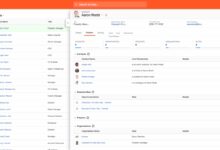
Why Basic CRM Software for Small Business Is a Game-Changer

For small business owners, time and resources are precious. Every minute spent chasing down customer details or managing spreadsheets is a minute lost from growing the business. A basic CRM software for small business solves this by centralizing customer data, automating routine tasks, and improving team collaboration. It’s not about complexity—it’s about clarity.
Eliminates Data Chaos
Without a CRM, customer information often lives in scattered spreadsheets, email inboxes, or even handwritten notes. This leads to missed follow-ups, duplicated efforts, and poor customer service. A basic CRM software for small business consolidates all contact details, interaction history, and sales stages into one accessible platform.
- Stores customer names, emails, phone numbers, and purchase history
- Tracks communication logs (calls, emails, meetings)
- Reduces human error from manual data entry
According to Salesforce’s State of Sales Report, high-performing sales teams are 2.2x more likely to use CRM tools than underperformers.
Improves Customer Relationships
Strong customer relationships are built on consistency and personalization. Basic CRM software for small business helps you remember birthdays, past purchases, and specific preferences—making every interaction feel tailored and thoughtful.
- Sends automated birthday or anniversary messages
- Logs customer complaints and resolutions
- Enables personalized follow-up emails based on behavior
“A CRM isn’t just a database—it’s the memory of your business.” — HubSpot Blog
Boosts Sales Efficiency
Sales pipelines can get messy fast. A basic CRM software for small business visualizes your sales funnel, showing exactly where each lead stands—whether they’re just inquiring, negotiating, or ready to buy. This visibility helps prioritize efforts and forecast revenue more accurately.
- Tracks leads from first contact to close
- Automates task reminders (e.g., follow up in 3 days)
- Generates performance reports for your team
With clear pipeline management, small businesses report up to a 29% increase in sales productivity, per Nucleus Research.
Top 7 Features of Basic CRM Software for Small Business
Not all CRMs are created equal—especially when you’re looking for simplicity and affordability. The best basic CRM software for small business includes essential features that deliver maximum value without overwhelming users. Here are the top seven features you should look for.
Contact Management
This is the foundation of any CRM. Contact management allows you to store and organize all customer and prospect information in one place. Instead of digging through old emails or sticky notes, you can instantly pull up a complete profile.
- Import contacts from email or Excel
- Tag contacts by category (e.g., VIP, lead, client)
- Link multiple contacts within the same company
Tools like Zoho CRM offer robust contact management even in their free plans, making them ideal for startups.
Lead and Opportunity Tracking
Leads are potential customers; opportunities are leads that are actively being pursued. Basic CRM software for small business helps you move leads through stages—from initial inquiry to closed deal—using customizable pipelines.
- Create custom sales stages (e.g., New, Contacted, Proposal Sent, Won)
- Assign leads to team members
- Set deadlines and reminders for follow-ups
This feature ensures no lead falls through the cracks and helps forecast revenue more accurately.
Task and Activity Automation
Manual follow-ups eat up time. Automation in basic CRM software for small business lets you schedule emails, set task reminders, and trigger actions based on customer behavior—like sending a thank-you email after a purchase.
- Automated email sequences (drip campaigns)
- Calendar integration for meetings and calls
- Workflow rules (e.g., if lead opens email, tag as ‘engaged’)
According to GetApp, 68% of small businesses using CRM automation report improved lead conversion rates.
Best Basic CRM Software for Small Business in 2024
With so many options on the market, choosing the right CRM can feel overwhelming. To help you decide, we’ve compiled a list of the top 5 basic CRM software for small business that balance ease of use, affordability, and powerful features.
HubSpot CRM
HubSpot CRM is one of the most popular free CRM platforms, especially among small businesses. It offers a clean interface, powerful automation, and seamless integration with marketing and sales tools.
- Fully free plan with no time limits
- Unlimited users and contacts
- Email tracking, meeting scheduling, and live chat
Its intuitive design makes it perfect for non-tech-savvy users. Plus, it integrates with Gmail, Outlook, and Slack. Learn more at HubSpot’s official site.
Zoho CRM
Zoho CRM is a versatile option that scales with your business. It starts with a free plan for up to 3 users and offers advanced features like AI-powered insights and workflow automation in paid tiers.
- Customizable dashboards and reports
- AI assistant (Zia) for predictive forecasting
- Mobile app for on-the-go access
Zoho is ideal for businesses that plan to grow and need room to expand. Visit Zoho CRM to explore pricing and features.
Insightly
Insightly combines CRM with project management, making it a great choice for service-based small businesses like consultants, agencies, or contractors.
- Project and task tracking within CRM
- Relationship linking (e.g., track multiple contacts at one company)
- Workflow automation and email integration
Its visual interface helps users see how sales and projects overlap. Check out Insightly for a free trial.
How to Choose the Right Basic CRM Software for Small Business
Selecting the right CRM isn’t just about features—it’s about fit. The best basic CRM software for small business aligns with your team size, budget, industry, and long-term goals. Here’s a step-by-step guide to making the right choice.
Assess Your Business Needs
Start by asking: What problems are you trying to solve? Are you losing leads? Struggling with follow-ups? Need better reporting? Define your pain points before evaluating software.
- List your top 3 CRM goals (e.g., improve response time, increase conversions)
- Identify key team members who will use the CRM
- Determine if you need mobile access or offline functionality
For example, a real estate agent might prioritize lead capture from websites, while a consultant may need strong calendar and task integration.
Consider Scalability and Integration
Choose a CRM that can grow with you. Even if you’re a solopreneur today, will the software support 5 or 10 users tomorrow? Also, check if it integrates with tools you already use—like email, calendars, accounting software, or marketing platforms.
- Look for integrations with Gmail, Outlook, QuickBooks, Mailchimp, etc.
- Ensure API access for custom integrations
- Verify mobile app availability and functionality
Platforms like HubSpot and Zoho offer extensive integration libraries, making them future-proof choices.
Test Before You Commit
Most basic CRM software for small business offers free trials or freemium plans. Use this time to test usability, onboarding, and support. Invite team members to try it and gather feedback.
- Import a sample list of contacts
- Set up a simple automation workflow
- Contact customer support with a test question
Pay attention to how intuitive the interface feels. A powerful CRM is useless if your team avoids using it.
Implementing Basic CRM Software for Small Business: A Step-by-Step Guide
Choosing a CRM is just the first step. Successful implementation ensures your team adopts it and uses it effectively. Follow this proven process to onboard your CRM smoothly.
Plan Your Data Structure
Before importing data, decide how you want to organize contacts, deals, and activities. Create consistent naming conventions and categorization rules.
- Define contact types (e.g., Lead, Customer, Partner)
- Set up custom fields (e.g., Industry, Source, Budget)
- Map out your sales pipeline stages
This prevents confusion later and ensures everyone uses the CRM the same way.
Import and Clean Your Data
Migrating old data? Don’t just dump it in. Clean it first—remove duplicates, update outdated info, and standardize formats (e.g., phone numbers, email addresses).
- Use CSV templates provided by the CRM
- Validate email addresses with tools like Hunter or NeverBounce
- Test import with a small batch before full migration
Poor data quality can undermine the entire CRM system, so invest time here.
Train Your Team
Even the best basic CRM software for small business fails if people don’t use it. Provide hands-on training and create simple documentation.
- Host a live demo session
- Create a quick-reference guide (PDF or video)
- Appoint a CRM champion to answer questions
According to Capterra, companies that provide CRM training see 3x higher user adoption rates.
Common Mistakes to Avoid When Using Basic CRM Software for Small Business
Even with the right tool, mistakes can derail your CRM success. Here are the most common pitfalls and how to avoid them.
Overcomplicating the Setup
It’s tempting to customize every field and workflow from day one. But complexity kills adoption. Start simple—use default settings and add features gradually.
- Begin with core features: contacts, deals, tasks
- Avoid creating too many custom fields early on
- Let user feedback guide future enhancements
Remember: the goal is usability, not perfection.
Ignoring Data Hygiene
A CRM is only as good as the data inside it. If your team doesn’t update records regularly, the system becomes outdated and unreliable.
- Set rules for when to update contact info
- Schedule monthly data cleanup sessions
- Use automation to flag stale leads
“Garbage in, garbage out”—if your CRM data is inaccurate, your decisions will be too.
Underutilizing Automation
Many small businesses use CRM just as a digital Rolodex. But the real power lies in automation. Don’t miss out on time-saving features like email sequences, task reminders, and lead scoring.
- Automate welcome emails for new leads
- Set follow-up tasks after calls or meetings
- Use tags to segment leads for targeted messaging
Automation can save up to 6 hours per week for a small sales team, according to Sales Hacker.
The Future of Basic CRM Software for Small Business
CRM technology is evolving fast, and small businesses are no longer left behind. The future of basic CRM software for small business lies in smarter automation, deeper integrations, and AI-driven insights—all while staying simple and affordable.
AI-Powered Insights
Artificial intelligence is making CRMs more proactive. Tools like Zia in Zoho CRM or Einstein in Salesforce can predict deal closures, suggest next steps, and even detect customer sentiment in emails.
- AI forecasts which leads are most likely to convert
- Recommends optimal times to follow up
- Flags at-risk customers based on communication patterns
These features, once reserved for enterprise software, are now available in basic CRM software for small business.
Mobile-First Design
With more teams working remotely, mobile access is no longer optional. The next generation of CRM apps offers full functionality on smartphones and tablets, including offline mode and voice input.
- Log calls and notes directly from your phone
- Access customer profiles during in-person meetings
- Receive push notifications for urgent tasks
Mobile CRM usage has grown by 40% since 2020, according to Gartner.
Deeper Ecosystem Integration
CRMs are becoming central hubs that connect with e-commerce platforms, social media, accounting software, and customer support tools. This creates a unified view of the customer across all touchpoints.
- Synchronize Shopify orders with CRM records
- Pull Facebook lead ads directly into your pipeline
- Sync invoices from QuickBooks to customer profiles
This level of integration reduces manual work and improves customer experience.
What is basic CRM software for small business?
Basic CRM software for small business is a simplified customer relationship management tool designed to help small teams organize contacts, track sales, manage tasks, and improve customer communication—all in one centralized platform. It’s typically affordable, easy to use, and scalable.
Is there a free CRM for small businesses?
Yes, several basic CRM software for small business offer free plans. HubSpot CRM and Zoho CRM are two of the most popular options, providing robust features like contact management, email tracking, and task automation at no cost for small teams.
How does CRM software help small businesses grow?
CRM software helps small businesses grow by improving lead tracking, increasing sales efficiency, enhancing customer service, and enabling data-driven decisions. It reduces administrative work, allowing teams to focus on building relationships and closing deals.
Can I use CRM software on my phone?
Yes, most basic CRM software for small business comes with mobile apps for iOS and Android. These apps allow you to access customer data, log calls, set tasks, and receive notifications on the go, ensuring you stay connected even outside the office.
How long does it take to set up a CRM?
Setting up a basic CRM software for small business can take anywhere from a few hours to a few days, depending on data size and customization needs. With free tools like HubSpot CRM, you can be up and running in under an hour.
Choosing the right basic CRM software for small business is one of the smartest moves you can make for long-term growth. It’s not about having the fanciest tool—it’s about having the right one. From organizing contacts to automating follow-ups and forecasting sales, a simple CRM brings clarity, efficiency, and professionalism to your operations. Whether you’re a solopreneur or a growing team, investing in a basic CRM pays off in stronger relationships, higher conversions, and more time to focus on what really matters—your customers.
Recommended for you 👇
Further Reading:
